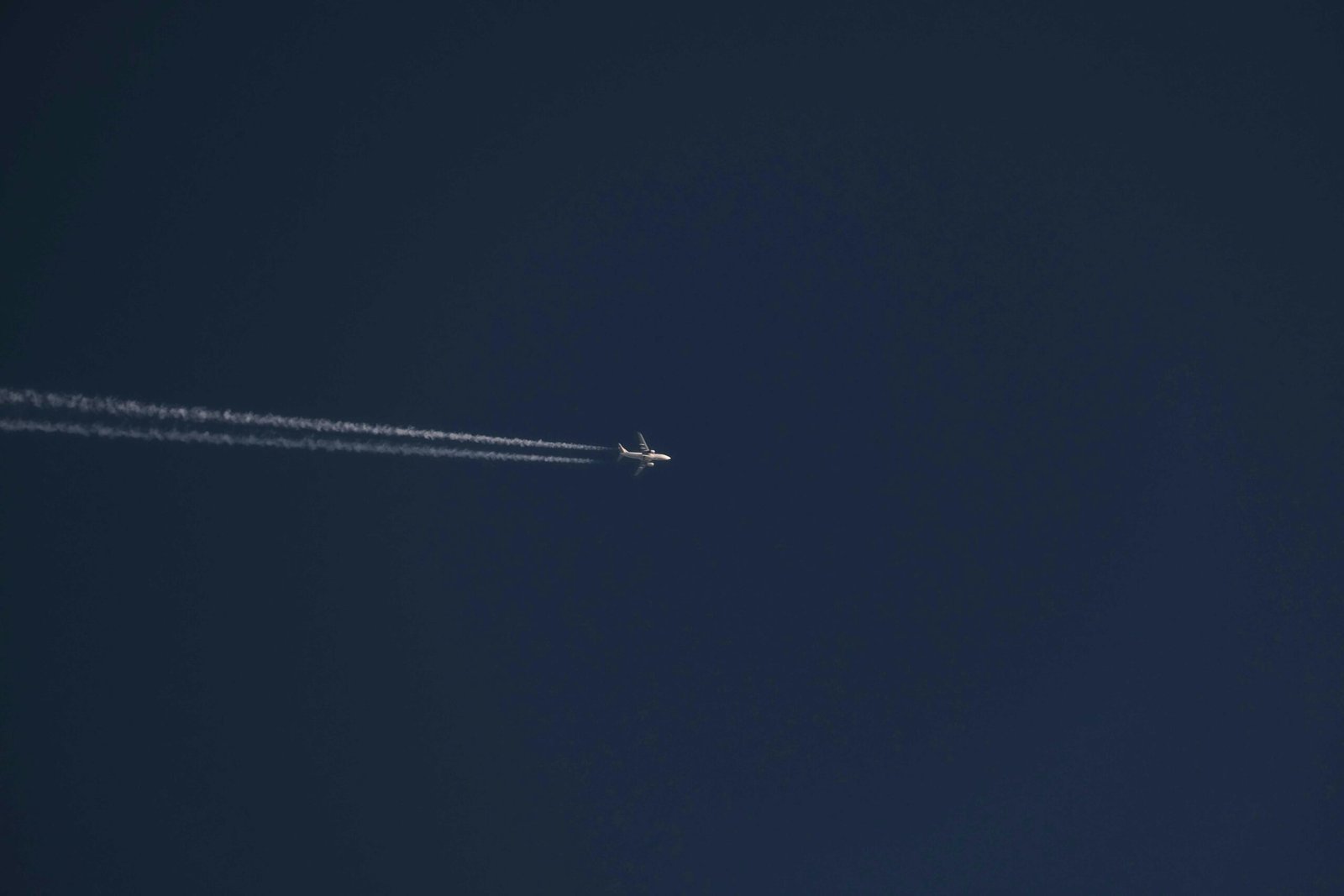
Have you ever wondered exactly how fast does an airplane travel while soaring 35,000 feet above the ground? The answer isn’t a single number. In fact, an airplane’s speed depends heavily on its type, the stage of flight, and even the weather. This guide will break down everything for you in simple terms.
Understanding Airplane Speed: More Than Just One Number
First, it’s important to know that pilots track two kinds of speed. There is airspeed and groundspeed. Understanding the difference is quite simple.
Airspeed is the speed of the aircraft relative to the surrounding air. This is crucial for keeping the plane flying. On the other hand, groundspeed is the plane’s speed relative to the ground. This is the speed that determines your arrival time.
For example, a strong tailwind pushes the plane forward, so its groundspeed becomes higher than its airspeed. Consequently, you arrive at your destination faster. The reverse is true for a headwind.
How Fast Does a Commercial Airplane Travel?
Commercial airliners, like the Boeing 737 or Airbus A320, are designed for efficiency. Therefore, they have an optimal cruising speed where they balance speed and fuel consumption perfectly. This speed is usually quite impressive.
A typical commercial jet cruises at about 550 to 600 miles per hour (mph), which is around 885 to 965 kilometers per hour (km/h). This happens at a cruising altitude of about 30,000 to 40,000 feet. At this height, the air is thinner, which reduces drag and helps the plane fly faster and more efficiently.
However, takeoff and landing speeds are much lower. For safety reasons, planes typically take off at around 160-180 mph and land at a slightly slower 150-165 mph.
What Factors Influence an Airplane’s Speed?
Several key elements determine how fast an airplane can fly. It’s not just about pushing the engines to their maximum. These factors work together to create a safe and efficient journey.
- Altitude: As mentioned, higher altitudes have thinner air. This means less resistance (drag), allowing the plane to travel faster while using less fuel.
- Wind Direction and Speed: A tailwind can significantly shorten flight time, while a headwind can lengthen it. Pilots constantly use this information to plan their routes.
- Aircraft Type: The design of the plane is a massive factor. A large passenger jet has powerful engines designed for long distances, whereas a small propeller plane has a completely different purpose and speed profile.
- Total Weight: The aircraft’s weight, including passengers, cargo, and fuel, influences its performance. A lighter plane can generally fly faster and more efficiently.
Comparing Speeds: Other Types of Aircraft
Commercial jets are just one part of the story. Different aircraft are built for very different missions, which directly impacts their speed.
Small Propeller Planes
Planes like the Cessna 172, often used for training and recreation, travel much slower. Their average cruising speed is only about 140 mph (225 km/h).
Private Jets
Private jets are built for speed and convenience. Consequently, many can fly faster than commercial airliners, often reaching speeds of over 650 mph (1,046 km/h).
Military Fighter Jets
These machines are in a league of their own. For instance, a fighter jet like the F-22 Raptor can easily break the sound barrier, reaching speeds of over 1,500 mph (Mach 2.25).
The Future of Air Travel: Supersonic and Hypersonic Speeds
Aviation technology is always advancing. While the famous Concorde jet, which flew at twice the speed of sound, was retired, companies are now developing new supersonic aircraft. In the future, we might even see hypersonic travel, which could cut a trip from New York to London to under 90 minutes. This next generation of travel will truly change our world.
In conclusion, the answer to “how fast does an airplane travel” is complex. While a commercial jet cruises around 575 mph, a tiny propeller plane and a military jet fly at vastly different speeds. The next time you’re on a flight, you’ll know all about the incredible speeds carrying you to your destination.