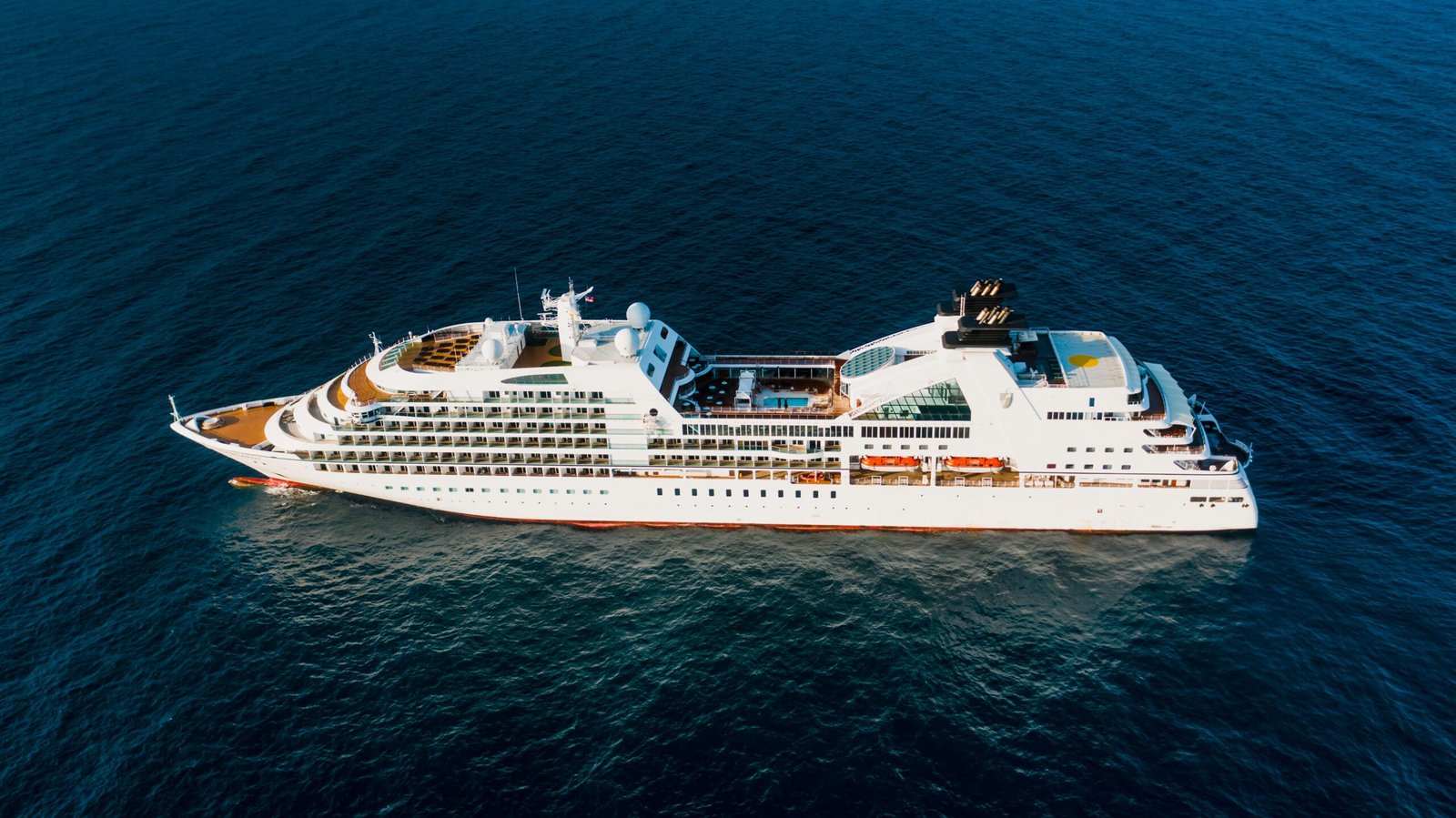
Have you ever stood on the deck of a massive ship and wondered, how fast does a cruise ship travel? The answer might surprise you. While these floating cities are built for comfort, not a race, they move at a steady and impressive pace. Consequently, their speed is a careful balance between the itinerary, passenger safety, and fuel efficiency.
What is the Average Speed of a Cruise Ship?
The speed of a ship is measured in knots, not miles per hour. A knot is a unit of speed equal to one nautical mile per hour, which is slightly faster than a standard mile.
- 1 knot = 1.15 miles per hour (mph)
- 1 knot = 1.852 kilometers per hour (kph)
The Cruising ‘Sweet Spot’
Most modern cruise ships have a maximum speed of around 25 to 30 knots (about 29-35 mph). However, they rarely travel that fast. Instead, they maintain a more economical and comfortable cruising speed. A typical cruising speed is between 20 and 24 knots (23 to 28 mph). This pace ensures a smooth ride for passengers and significantly optimizes fuel consumption.
Factors That Influence How Fast a Cruise Ship Travels
Several key factors determine a ship’s speed on any given day. Therefore, the captain and crew constantly adjust the speed based on these changing conditions.
- Itinerary and Schedule: The ship must arrive at its next port on time. As a result, speed may increase to make up for delays or decrease to arrive at a scheduled time without waiting at sea.
- Weather Conditions: Strong winds, high waves, and powerful ocean currents can significantly slow a ship down. For safety and comfort, the captain will always reduce speed in rough seas.
- Fuel Efficiency: This is a major factor. Traveling at maximum speed burns an enormous amount of fuel. By cruising at a lower, more efficient speed, cruise lines save millions of dollars and reduce their environmental impact.
- Ship Design and Size: A ship’s hydrodynamics, size, and engine power all play a crucial role. For example, newer ships with more streamlined hulls can often travel faster and more efficiently than older vessels.
Why Don’t Cruise Ships Go Faster?
Although ships are capable of higher speeds, there are very good reasons for maintaining a steady pace. It’s not just about saving fuel; it’s also about the guest experience.
Passenger Comfort
A primary goal of any cruise line is to provide a smooth and enjoyable journey. Sailing at top speed, especially in less-than-perfect weather, would create a rocky and uncomfortable ride. In fact, a slower pace minimizes vibrations and the rocking motion felt on board.
Safety First
Sailing at a controlled speed gives the crew more time to react to unexpected obstacles. This can include smaller boats, marine life, or changing weather patterns. Moreover, it ensures better maneuverability, especially when navigating through busy channels or near coastlines.
Cruise Ship Speed vs. Other Vessels
To put a cruise ship’s speed in perspective, it’s helpful to compare it to other watercraft:
- Cargo Ships: Generally travel at a similar speed, around 16-24 knots.
- Ferries: High-speed ferries can be much faster, often exceeding 35-40 knots.
- Speedboats: Can easily reach speeds of 50 knots or more.
In conclusion, while a cruise ship won’t win a race, its speed is perfectly calibrated for its purpose. It’s fast enough to take you to amazing destinations around the world but slow enough to ensure your journey is safe, comfortable, and efficient. The next time you’re on board, you’ll know the science behind its steady and relaxing pace.